
What is a Land Surveyor?
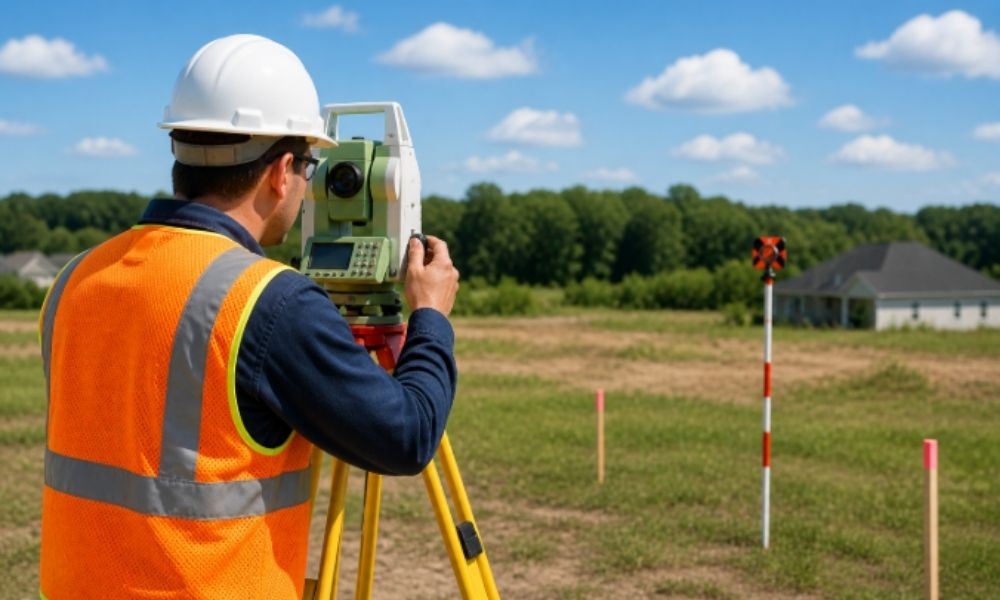
A land surveyor measures land and identifies exact property boundaries. They confirm where a property begins and ends and check features that affect land use. Their work supports buying, building, and legal decisions by providing accurate and verified property information through land surveying.
Most people think a surveyor only places markers. That is only part of the job.A surveyor helps you avoid problems before you buy, build, or sell a property.
Do You Need a Land Surveyor?
Yes, in many cases. A land surveyor confirms boundaries, checks for issues, and provides accurate data about your property. This helps prevent mistakes before building, buying land, or resolving disputes. Without a survey, decisions rely on guesswork, which often lead to costly problems.
Skipping this step creates risk. Many issues show up only after work begins.
What Does a Land Surveyor Do?
A land surveyor measures land, verifies property lines, and identifies features that affect land use. They check boundaries, locate easements, map elevation, and find encroachments. This information helps property owners plan projects, secure permits, and avoid costly mistakes before construction or purchase.
They compare legal records with real conditions on the ground. That is where the value comes from. They do not just measure. They verify.
Property Boundaries
Surveyors locate exact boundary lines and corner points using deeds, maps, and field measurements.
Old fences or markers do not always match legal lines. Many people trust them anyway. That leads to disputes.
Land Measurements
Surveyors measure distances, angles, and elevation.They use GPS tools and other equipment to collect accurate data.
These measurements show the true shape and size of a property. Plans depend on this information.
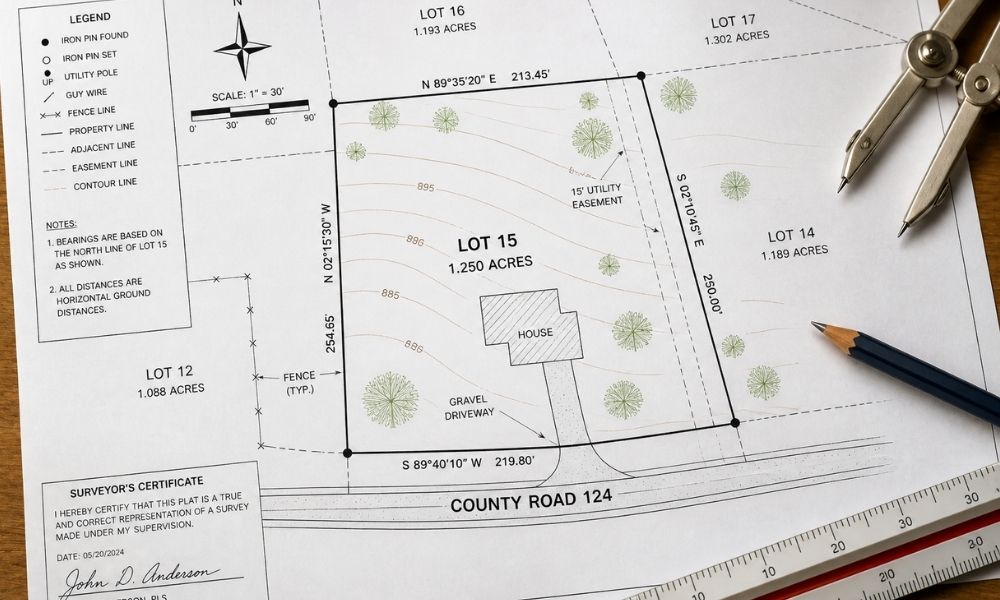
Easements and Access
Some parts of a property have limits on use.
A surveyor identifies:
- Utility easements
- Shared driveways
- Access paths
You may own the land but still have limits on how you can use it.
Topography and Slope
Land is rarely flat. A surveyor maps slopes, elevation changes, and low areas.
This helps with:
- Drainage planning
- Foundation design
- Road placement
Ignoring land shape often leads to water problems.
Encroachments
An encroachment happens when something crosses a property line.
Examples include:
- A fence built over the line
- A shed placed in the wrong spot
- A driveway crossing into another lot
A surveyor finds these early, before they turn into legal issues.
Why is a Land Surveyor Important?
A land surveyor provides accurate property data that helps prevent construction errors, avoids disputes, and supports permit approvals. Without a survey, property decisions rely on guesswork. This often leads to delays, added costs, and legal problems.
Avoid Costly Errors
Boundary mistakes can delay projects by one to three weeks or more. In some cases, work must be removed or rebuilt.
Fixing a mistake costs more than preventing it.
Prevent Disputes
Many property disputes come from unclear or outdated boundary data. A survey provides clear proof.
This reduces conflict and saves time.
Support Permits
Many projects require survey data. Local offices may ask for:
- Property lines
- Setbacks
- Elevation details
Without this, your permit can be delayed or denied.
Protect Property Value
Clear boundaries and accurate records help protect your property. Buyers feel more confident when everything is documented.
What Happens If You Do Not Hire a Land Surveyor?
Skipping a land survey creates real problems. Most show up after work starts, when fixes cost more.
You might:
- Build a fence 2 to 4 feet past your boundary and have to remove it
- Pour a driveway that crosses into a neighbor’s lot and cut it back
- Place a house too close to a setback line and fail inspection
- Block a utility easement and clear it later for access
- Pause your project for 1 to 3 weeks while fixing layout issues
These cases happen often.
Many owners rely on online maps or old sketches. Those can be off by several feet. That gap is enough to place something in the wrong spot.
Once work starts, changes cost more. Labor, materials, and time all increase.
A survey done early avoids these issues.
How a Land Surveyor Works on Your Property
A land survey begins with research of property records and legal descriptions. The surveyor then visits the site, takes measurements, and places markers. After collecting data, they create a survey drawing that shows boundaries, structures, and key features for planning and legal use.
The process usually follows these steps:
- Review deeds and past surveys
- Visit the site and measure the land
- Mark boundary points
- Record field data
- Prepare a survey drawing
This drawing guides planning, permits, and construction.
Choosing the Right Land Surveyor
Not all surveyors handle the same type of work. Some focus on residential lots, while others handle larger properties.
Look for:
- A licensed professional
- Experience with your type of property
- Clear communication
If you are planning a project, working with a land surveyor in Talladega, Alabama or your local area can help you understand local rules and site conditions.
FAQ About Land Surveyors
What is a land surveyor?
A land surveyor measures land and confirms property boundaries. They provide accurate data used for building, buying, and resolving disputes.
What does a land surveyor do?
They measure land, verify boundaries, identify easements, and map land features that affect use and construction.
When do you need a land survey?
Before buying land, building, installing fences, or resolving boundary issues.
How much does a land survey cost?
Costs vary based on property size, location, and complexity. Smaller residential surveys cost less than large or detailed surveys.
How long does a land survey take?
Most surveys take a few days. Larger or complex properties may take longer.
